PAYMENTS.
ACCOUNTING. COMPLIANCE.
The system of record for financial risk governance

CommunityPay is financial risk governance infrastructure for community associations — payments and accounting systems that govern how money moves, record every decision, evaluate counterparty risk, and enforce statutory compliance.
Every transaction is enforced before it posts. Ownership changes hands. The record does not. Built to institutional audit standards, for community associations and any entity that accounts for shared property.
Why shared property needs a ledger
An association spends other people's money on property they own together, through volunteers who change every year. The record has to outlast all of them.
Each line on the right is enforced by the ledger and the database beneath it, not by a policy someone has to remember.
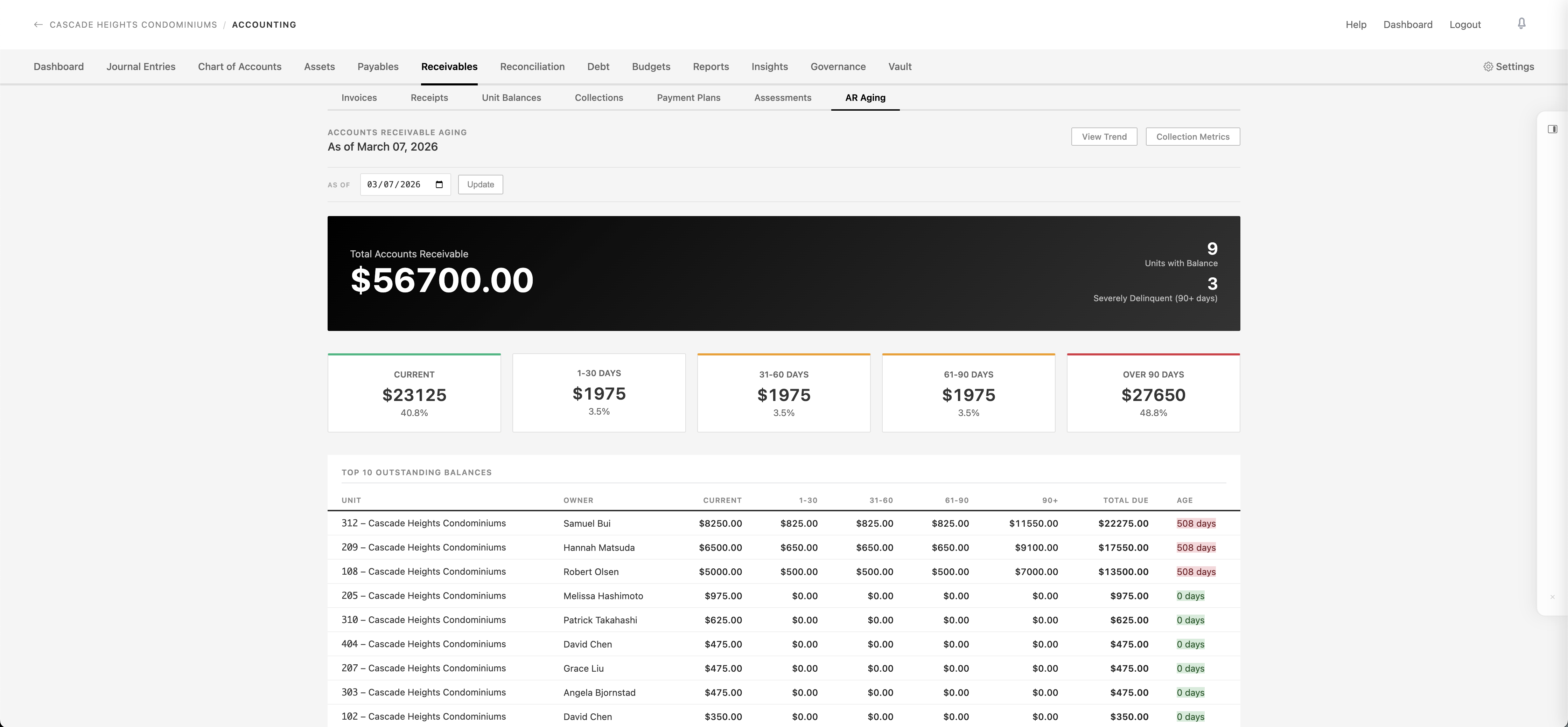
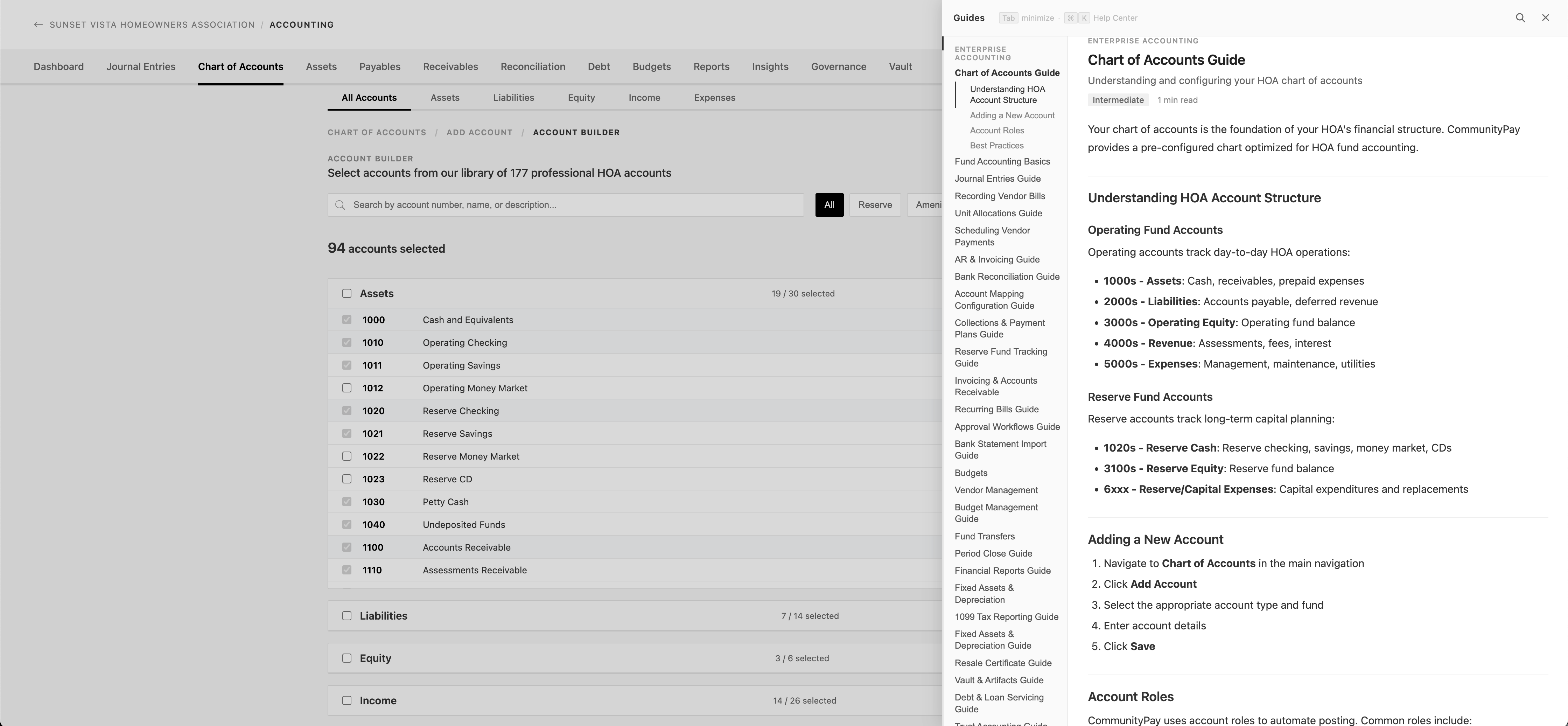
30+ financial reports, including the CIRA standard set.
CommunityPay generates resale certificates mapped to the statute and maintained as the law changes.
Same JournalEngine, enforcement guards, and bank reconciliation — separate product surfaces for specialized use cases. All included under one subscription.
Professional Managers · Attorneys · Escrow Officers · Title Officers · CDFIs · Lenders
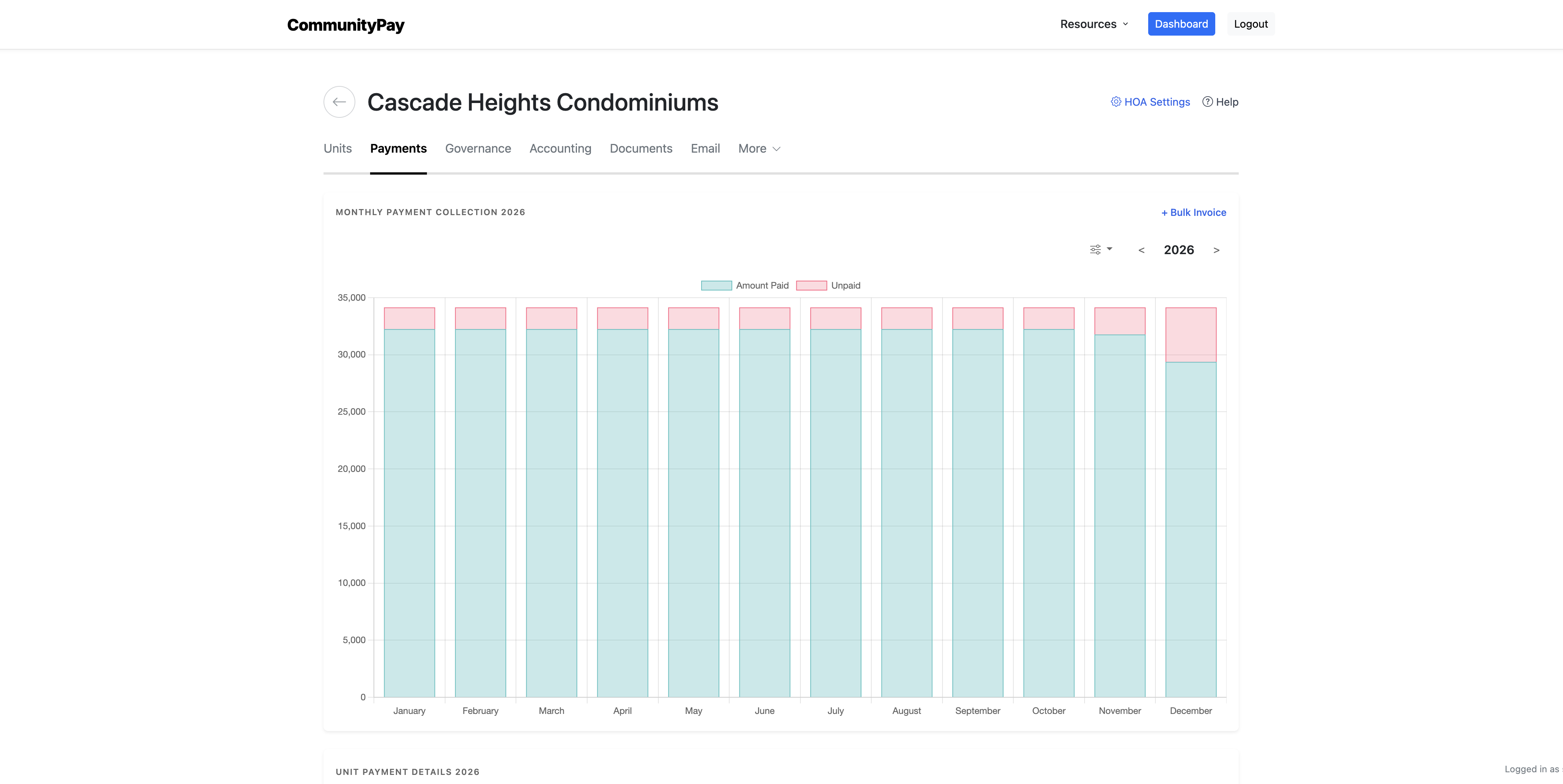
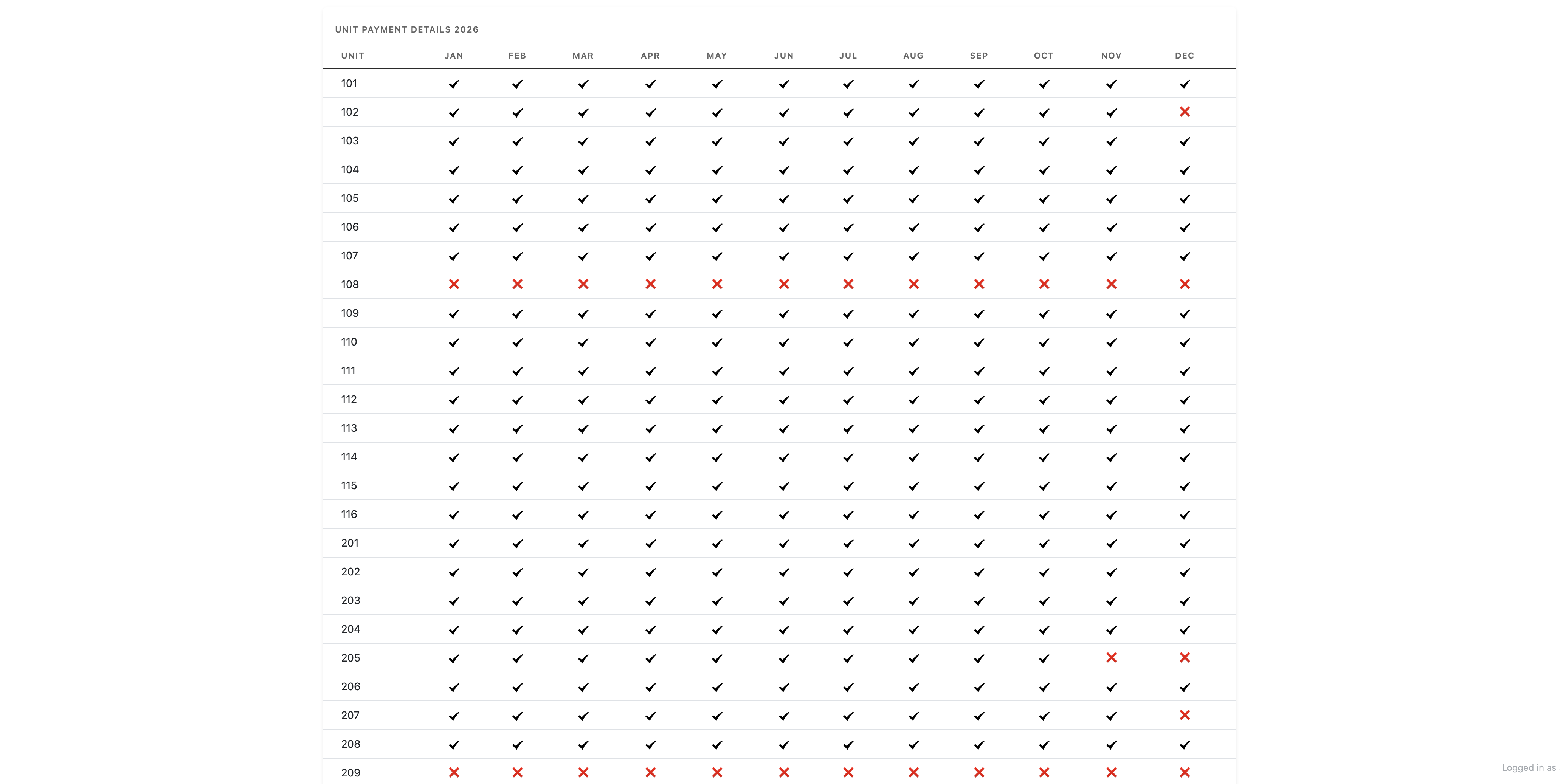
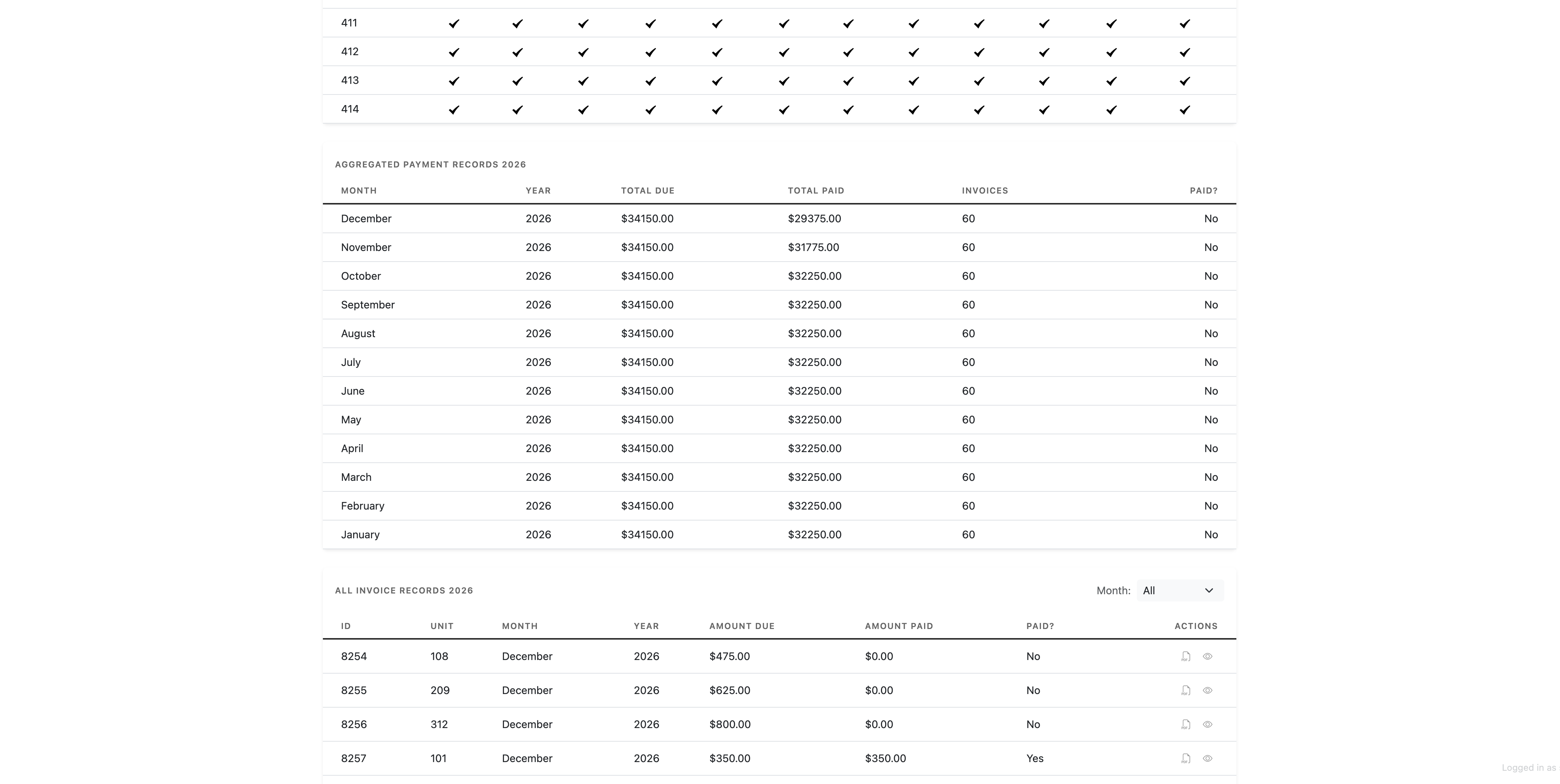
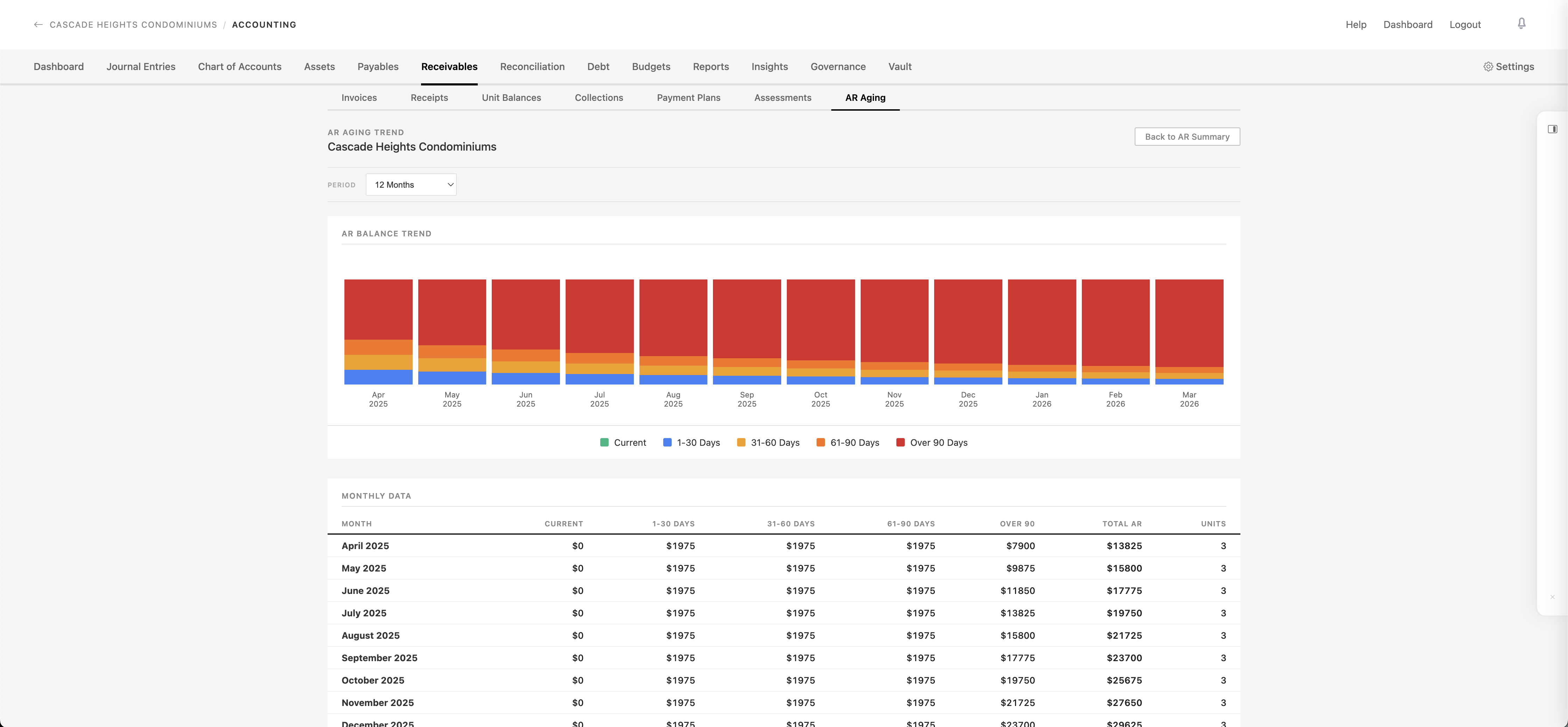
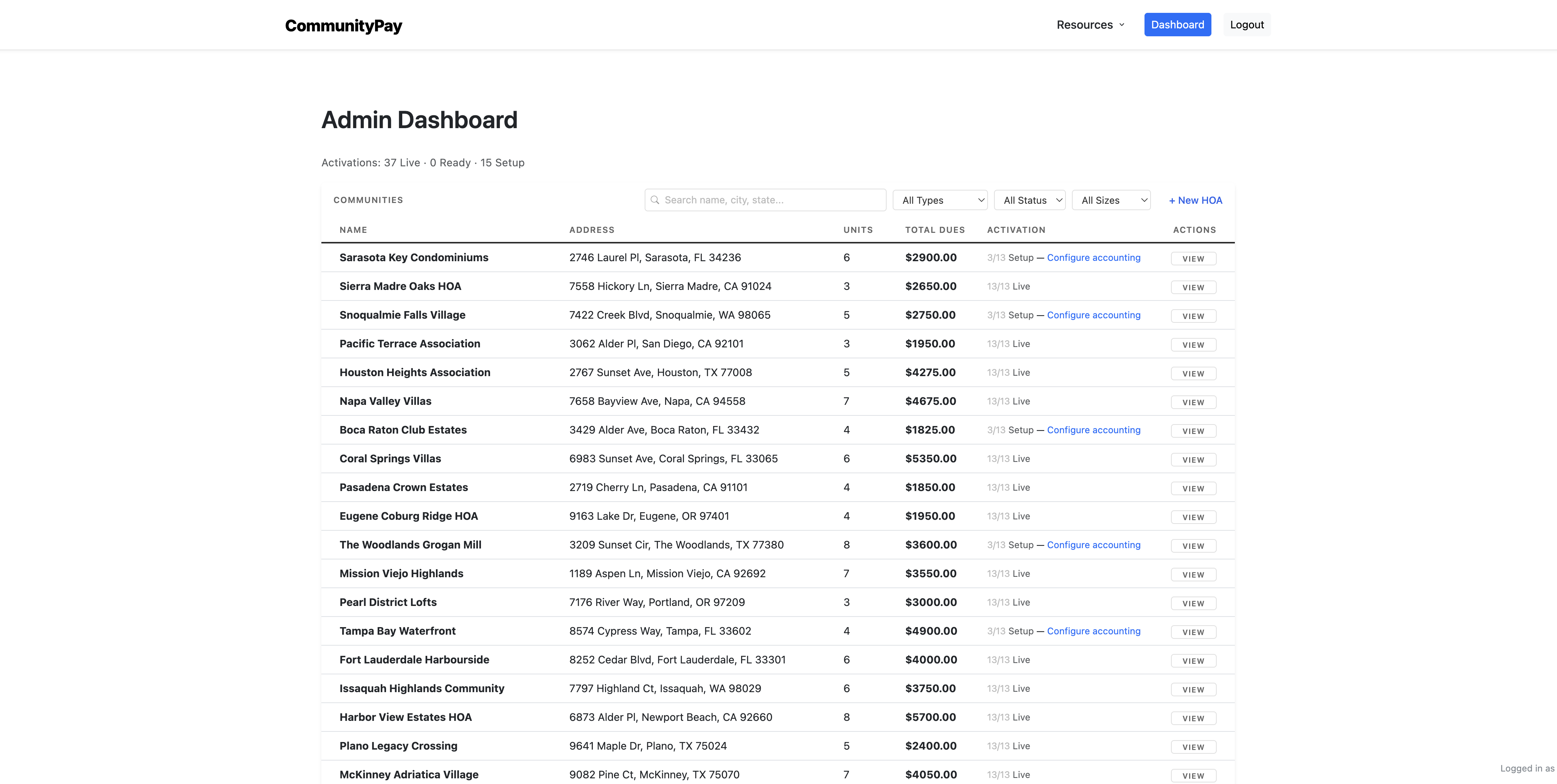
Dues Posted to the Ledger as They Arrive
Assessments and fees post to the ledger as they are collected, with no manual entry.
Each payment and its record stay linked in the ledger, so every dollar traces to the entry that recorded it.
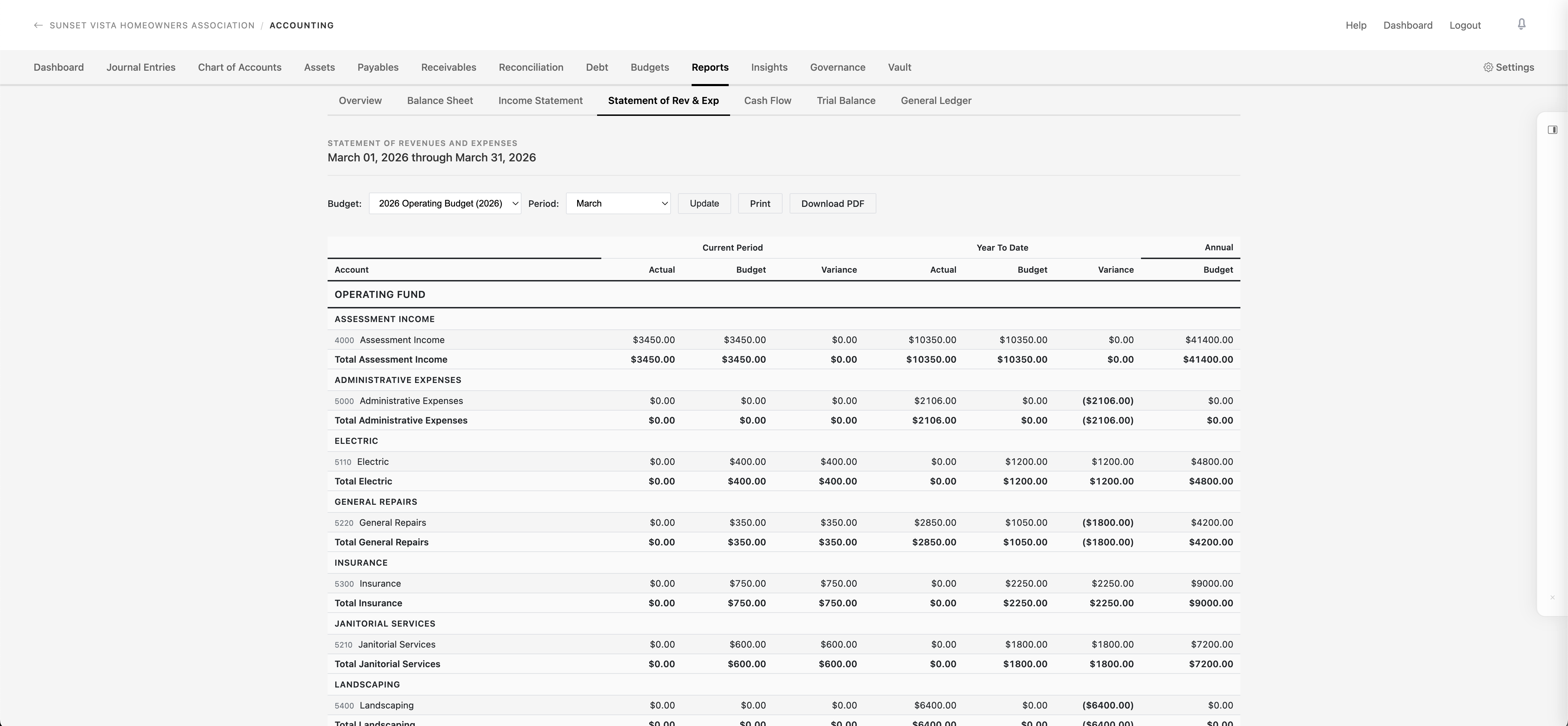
View interfaceDetailed Budgeting & Reports
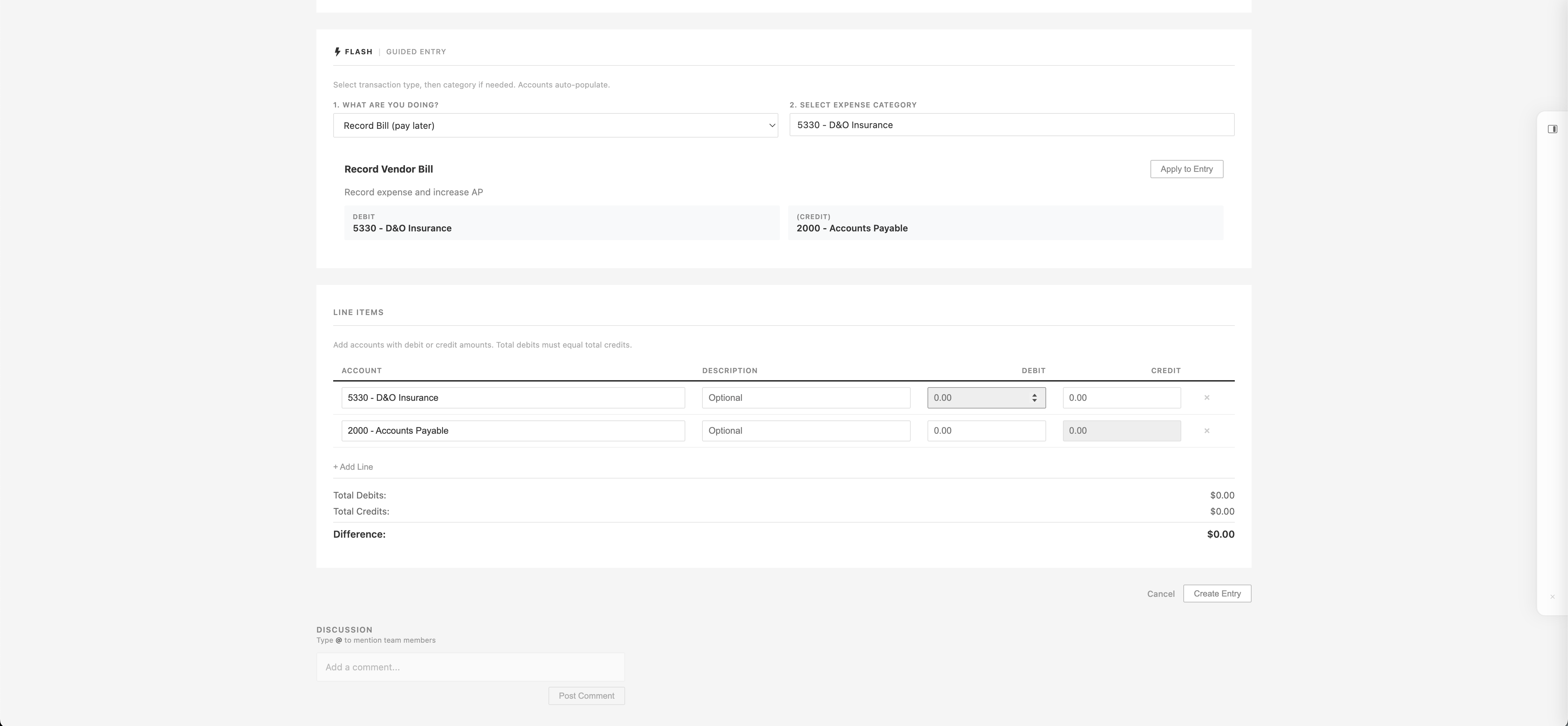
Financial activity is recorded directly to the ledger, with income, expenses, and fund allocations permanently linked to supporting records.
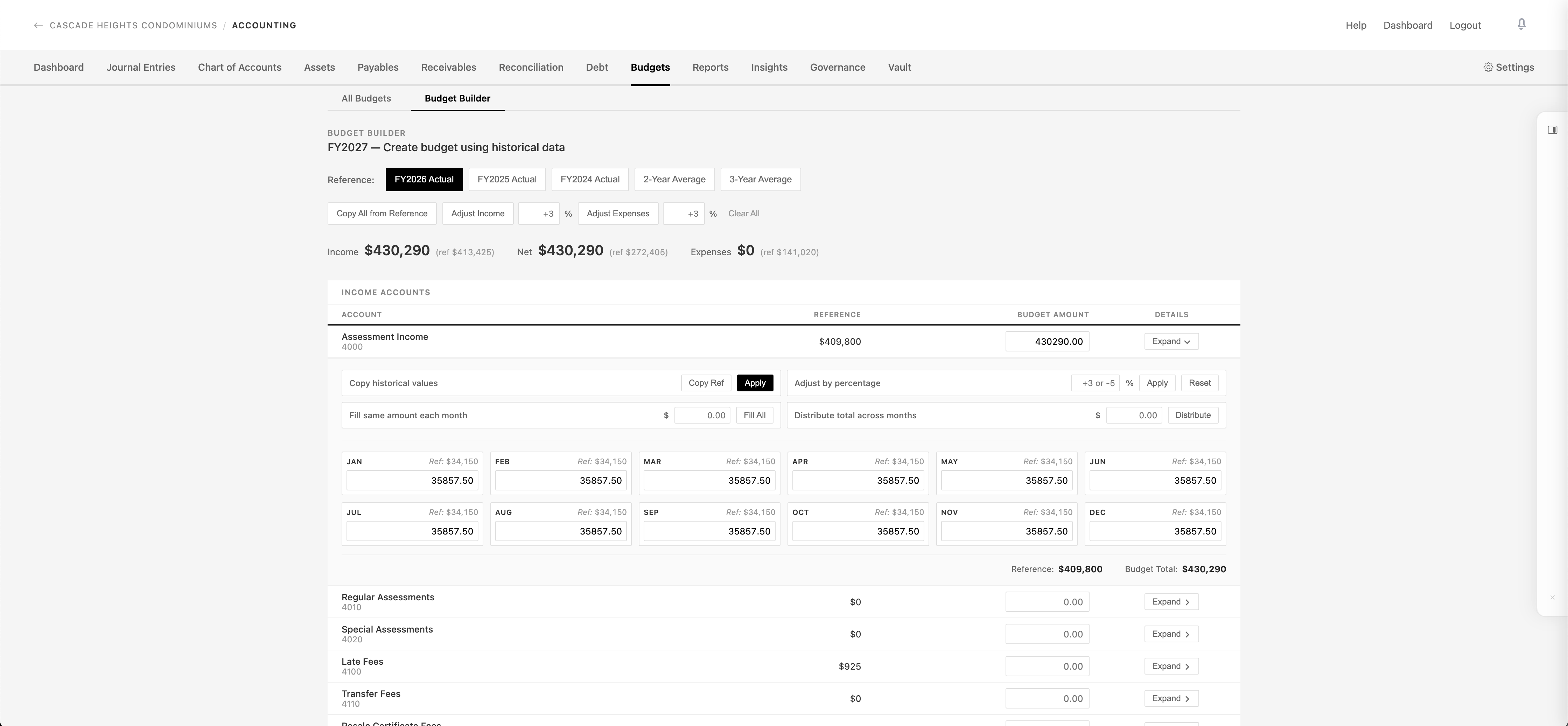
Budgets are built in the ledger and reported against it: revenue and expense against budget by fund, with reserve components tracked by useful life and funding. Statements, reports, and board packets generate from the same entries.
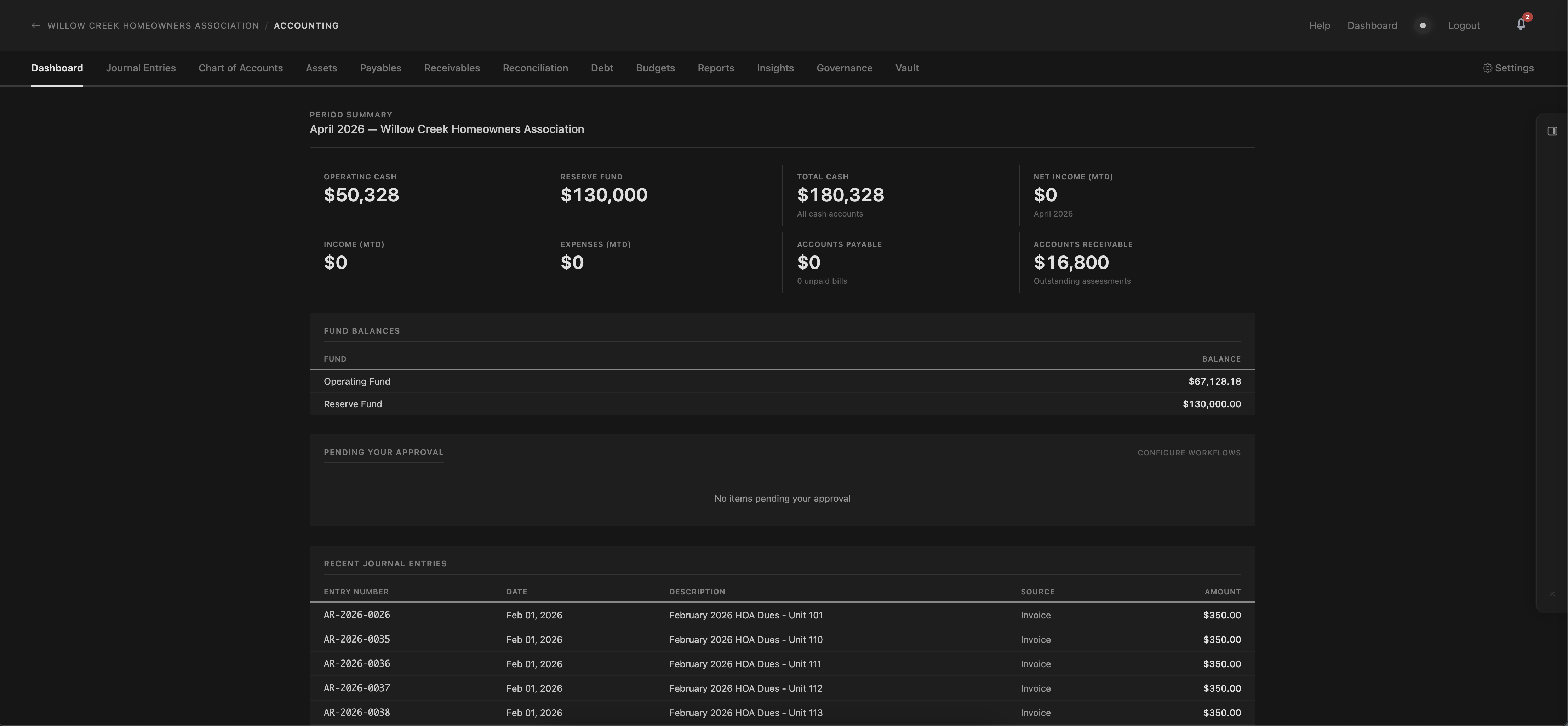
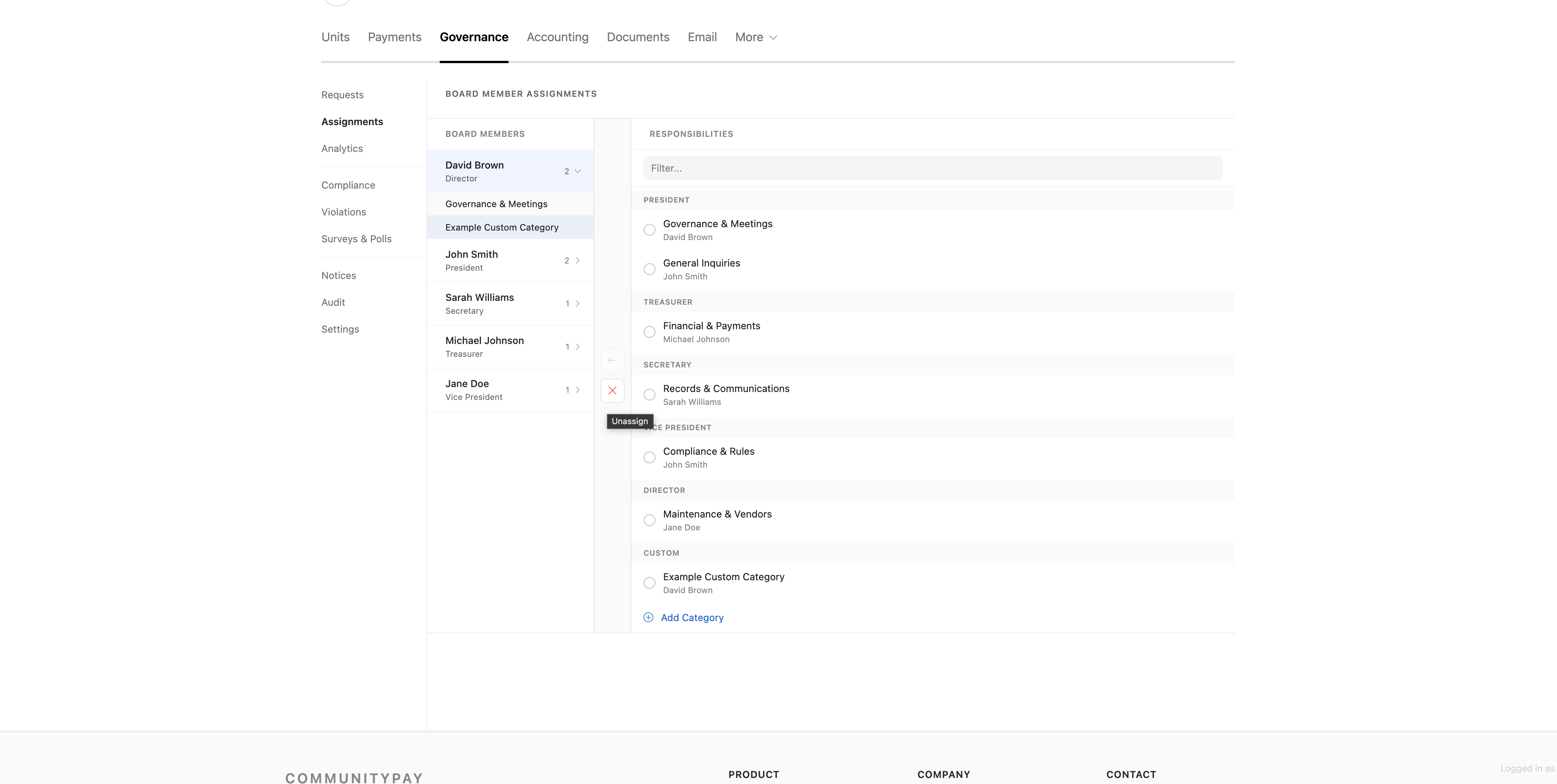
View interfaceGovernance & Accountability
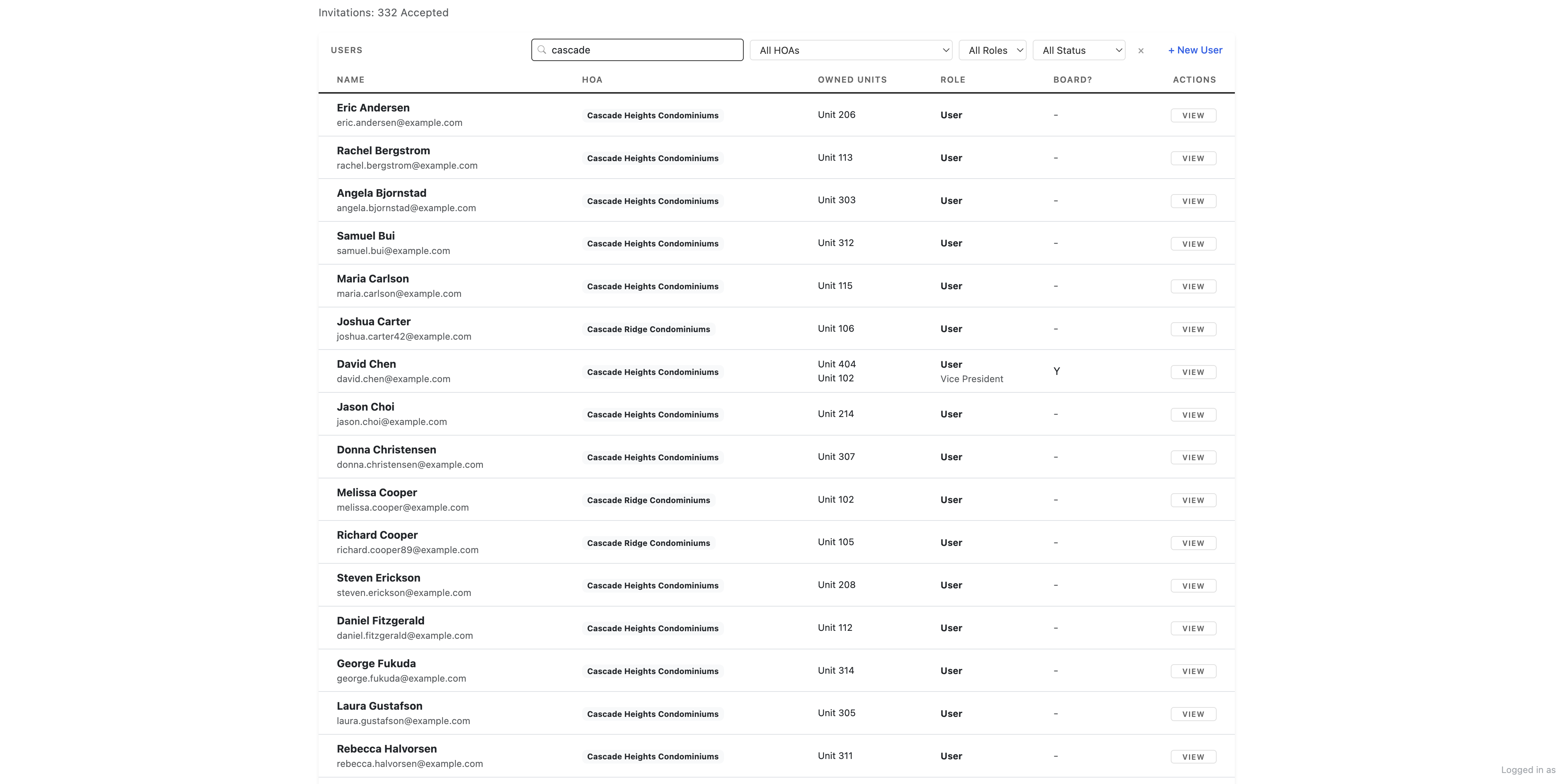
Roles, responsibilities, and approvals are assigned in the system. Each approval routes to the right person and is recorded permanently.
As board members transition, records, permissions, and historical context remain with the community, not the individual, so the next board starts from the full record.
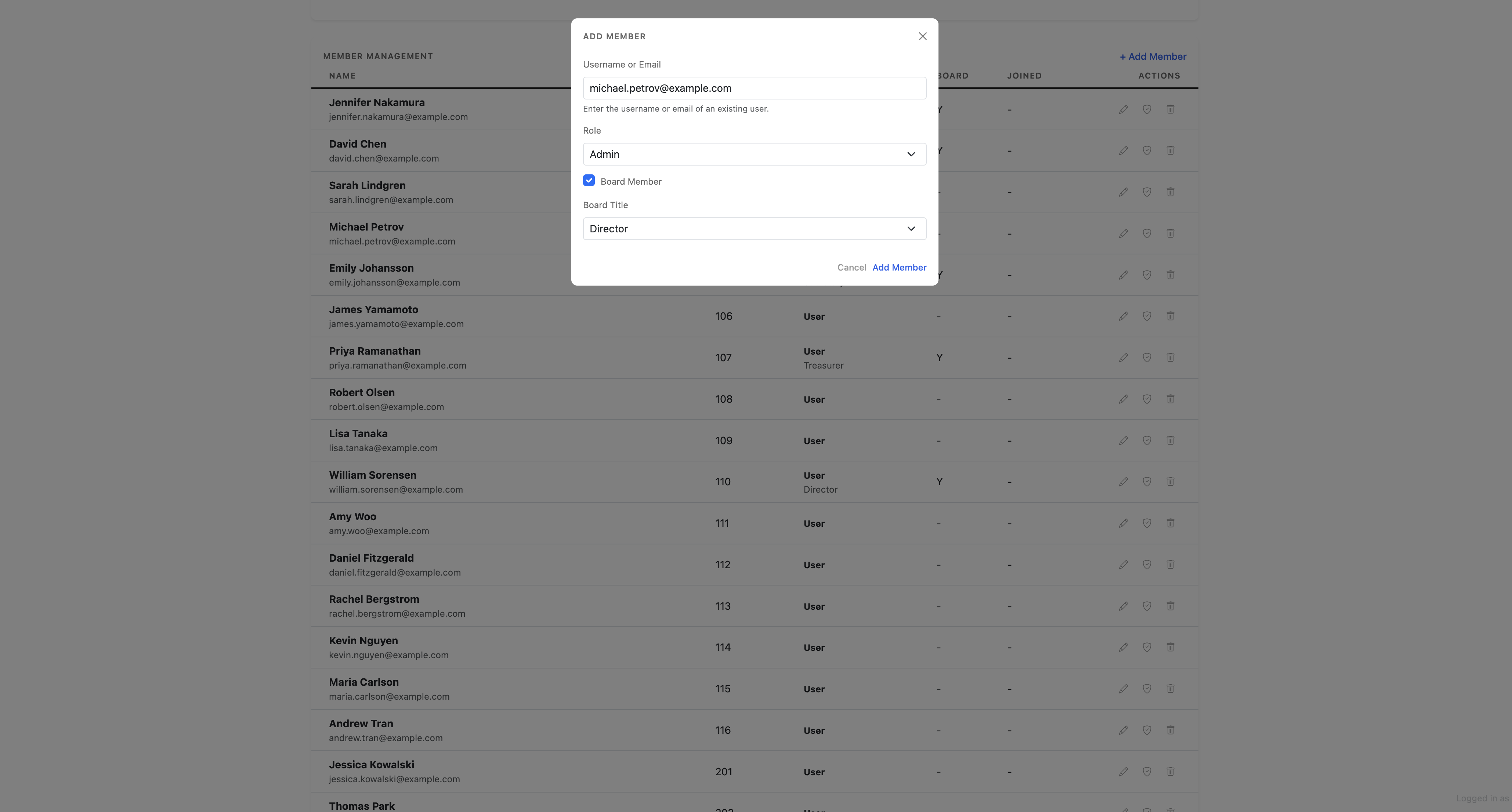
Authority sits with the association's admin; staff cannot change who holds it, and the board is emailed on every grant and removal. Paying a vendor, changing a vendor's bank, or changing the payout bank takes a fresh authenticator code, and the payout bank also takes two board members and the association's own bank PIN. Every vendor payment and top-up is emailed to the whole board.
Secure resident access and payment portals included.
View interfaceThis is the Mandatory Enforcement Choke-Point Architecture with Two-Phase Immutable Decision Telemetry. Every transaction enters the JournalEngine. The dispatcher runs every applicable guard in order and stops at the first block; a pass never skips a later guard. The outcome forks three ways, and the EnforcementDecision is sealed with both the signal state and the statute snapshot it relied on. Years later, the entry can still be examined.