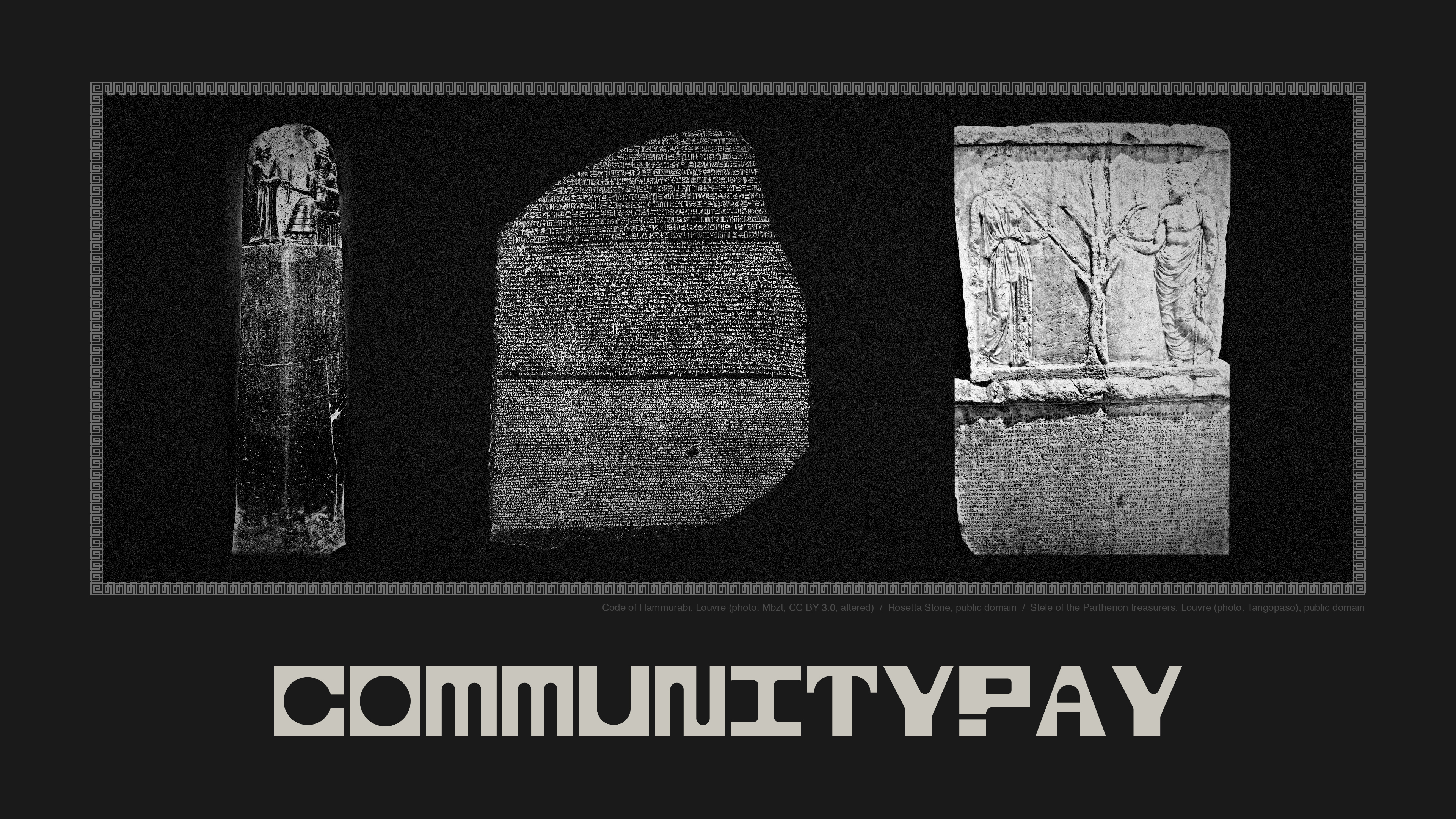
The Code of Hammurabi stands 2.25 meters tall in the Louvre, a basalt stele cut in the eighteenth century BC. About 600 years later it was carried off to Susa as plunder. There, seven columns of the laws, each of more than eighty lines, were polished off the stone, by one account so the king who took it could write his own legend in the space. The polished band is still on the stele, and anyone standing in front of it can see where the laws were.
Most of what was erased is known anyway. The laws were copied onto clay for centuries, and tablets from Babylon, Nineveh, Nippur, and Sippar fill in much of the missing text.
A record that lasts shows where it was cut, and it exists in more than one place.
Where the Cut Shows
Every entry in the ledger passes one enforcement choke point before it exists, and the decision made there is written down and never edited. Each decision's hash includes the hash of the one before it. Every night the chain is recomputed and sealed into a snapshot.
Remove a decision, or change a figure inside one, and every hash after it stops matching. The gap shows.
More Than One Place
The Rosetta Stone carries one decree in three scripts: hieroglyphs, Demotic, and Greek. By the time it reached London, no one could read the first two. The Greek could be read, and it was the way back into the other two. The record survived because a copy of it existed in a script someone still understood.
An association's books leave CommunityPay as one package: every entry with its decision, every receipt, bill, and statement, and a manifest that lists each file with its hash. The formats are the ones an auditor already reads. The association's CPA takes the package through the portal, and the association can have it at any time. The database itself is backed up on a schedule.
That includes us. On every association's books the record is kept properly behind the scenes, whether or not anyone ever asks to see it. If CommunityPay closed tomorrow, the books would still read in the formats they left in.
Read by the People It Is For
The third stone is quieter. In 410 BC the treasurers of Athena cut a year's expenditures into Pentelic marble and set the slab up on the Acropolis, where the city could read it. Above the figures, the relief shows Athena and a figure standing for the people, with the sacred olive tree between them.
The board sees every fee the processor charged, itemised. A resident sees every payment and what it settled. A buyer's title company receives a resale certificate whose figures were computed from these books on the day it was generated. The platform's own counts, and the digest that covers them, are public: communitypay.us/verify/platform.
What Changes and What Does Not
The part of CommunityPay that changes most often is the screen. The part that changes least is the record and the rules that hold it.
What It Does Not Do
The cut shows. It does not restore what was cut. Restoring is the copy's job, and a copy is only as current as the day it was taken.
The polished band is still on the stele.
Images: Code of Hammurabi, Louvre, photograph by Mbzt, CC BY 3.0, altered. Rosetta Stone, public domain. Stele of the accounts of the Parthenon treasurers, Louvre (Ma 831), photograph by Tangopaso, public domain. Treatment and framing by CommunityPay.
Scott Vuilleumier · Founder of CommunityPay, Inc.
Data science, investment banking, and financial systems engineering and ledger design.